I know I'm a little behind; I also know that this is a little dramatized, but I'm down with the idea of this video
Happy New Year!
Sunday, January 9, 2011

Sunday, November 28, 2010
Follow Your Nose, Lucky Charms
I remember reading an essay from "Surely, you must be joking Mr. Feynman," where good Richard himself describes a scientific publication on the superior olfactory sense of bloodhounds. Led by simple human hubris, he decides to test the olfactory powers of homo sapien, himself. At the time, his wife was in hospital (Is that the way the Brits use it? I hope so cause I really like it) with something serious. On his next visit to hospital, he described to her the publication and his belief that the human nose, when put to the test would outperform expectation. To test his theory, he asked his wife to choose one of the books from a stack of five or ten on the window sill while he was outside of the room. He would return and smell out which of the books she handled. And so it went that he was able to pick the right book. I don't know how many times. I can't even remember if I got all the details right, I'm just going on recall having read the essay one time five years ago. It stuck with me though because I've often noticed how powerful scents can be.
The other morning I was dramatically reminded of this as I walked onto the hospital floor. My resident enthusiastically greeted me, "Hey Jeff! Check out Mrs. W real quick. I think the nurse still has the bed pan. Let me know what you think!" The sun was no where near rising, the majority of the lights on the floor still hadn't come on. Roasters were still in deep slumber, and here I was catching an eye opener of Mrs. W's diarrhea. I dutifully inspected the soupy content for any signs of mal absorption, blood, or infectious process thinking the whole time, "Is this really what I want to do with my life? Seriously, who does this?"
Days have passed; Some days I don't have an answer to that question. And then there are moments, like the few I've experienced over the past couple of days that remind me that it is the uniqueness of our job that makes it so precious.
Ms S traveled to us, transferred by ambulance from a small hospital two hrs away. 39 yrs old, two kids at home, and her parents trailing the ambulance in the slow traffic that always ensues with the year's first snowfall. She left the outside hospital in a stable condition. When she got to us, she had all of the signs of sepsis--an infection that can quickly take the unsuspecting patient to the morgue. Two days later, I stepped into her room, examining a totally different patient. Her skin tone was back, her eyes had cleared, her breathing returned. It was apparent without a stethoscope or any exam that she was out of the storm. My team followed into the room and the parents kept pointing out what a miracle had been worked; going on praising us for the work we did and kindly reminding us that it was God and not the white coat behind it all.
In these instances, you know it is nothing that you did. Of course you did what evidence-based medicine dictates so you never feel like it was something, "you" did; but that still doesn't take away from how awesome you feel in those unique moments. You don't feel pride, you just feel luck. You feel the luck of the situation, that the medicine worked, that this patient is back, smiling along with everyone else in the room, and the luck you have to be a part of it all.
The other morning I was dramatically reminded of this as I walked onto the hospital floor. My resident enthusiastically greeted me, "Hey Jeff! Check out Mrs. W real quick. I think the nurse still has the bed pan. Let me know what you think!" The sun was no where near rising, the majority of the lights on the floor still hadn't come on. Roasters were still in deep slumber, and here I was catching an eye opener of Mrs. W's diarrhea. I dutifully inspected the soupy content for any signs of mal absorption, blood, or infectious process thinking the whole time, "Is this really what I want to do with my life? Seriously, who does this?"
Days have passed; Some days I don't have an answer to that question. And then there are moments, like the few I've experienced over the past couple of days that remind me that it is the uniqueness of our job that makes it so precious.
Ms S traveled to us, transferred by ambulance from a small hospital two hrs away. 39 yrs old, two kids at home, and her parents trailing the ambulance in the slow traffic that always ensues with the year's first snowfall. She left the outside hospital in a stable condition. When she got to us, she had all of the signs of sepsis--an infection that can quickly take the unsuspecting patient to the morgue. Two days later, I stepped into her room, examining a totally different patient. Her skin tone was back, her eyes had cleared, her breathing returned. It was apparent without a stethoscope or any exam that she was out of the storm. My team followed into the room and the parents kept pointing out what a miracle had been worked; going on praising us for the work we did and kindly reminding us that it was God and not the white coat behind it all.
In these instances, you know it is nothing that you did. Of course you did what evidence-based medicine dictates so you never feel like it was something, "you" did; but that still doesn't take away from how awesome you feel in those unique moments. You don't feel pride, you just feel luck. You feel the luck of the situation, that the medicine worked, that this patient is back, smiling along with everyone else in the room, and the luck you have to be a part of it all.
Tuesday, October 19, 2010
Where is the writer?
"Is that thing moving anymore? It's been like months"
"No... I keep checking; no sign of life. It's been long, too long"
"Really?
Give it a poke; Get a stick, maybe we could turn it over."
"Sick, what if there is nothing but maggots on the other side?"
"No point in turning it over. It's been so long, that's the only possible thing we could find"
"Oh sick, absolutely! I think I smell them. Do you smell them? Sick, it's on my clothes. Smell my shirt! Let's get out of here!"
"Wait, wait! I need to see, just a peak at what is really on the inside."
How long can one go without writing before it is assumed you are all washed up? This picture I snapped the other day raises the question.

Lying on a Rochester beach post Labor Day = poor prognosis
"No... I keep checking; no sign of life. It's been long, too long"
"Really?
Give it a poke; Get a stick, maybe we could turn it over."
"Sick, what if there is nothing but maggots on the other side?"
"No point in turning it over. It's been so long, that's the only possible thing we could find"
"Oh sick, absolutely! I think I smell them. Do you smell them? Sick, it's on my clothes. Smell my shirt! Let's get out of here!"
"Wait, wait! I need to see, just a peak at what is really on the inside."
How long can one go without writing before it is assumed you are all washed up? This picture I snapped the other day raises the question.

Lying on a Rochester beach post Labor Day = poor prognosis
Sunday, August 15, 2010
"When there is nothing left to burn..."
Surgery clerkship, complete.
I finished the last three weeks on the burn unit. My take home message for us all: Don't throw gasoline on anything!!
I can't believe I made it through Boyscouts, through adolescents, without a serious burn. It turns out that lots of people do get burned when gasoline is mixed with an open flame. Another common combination is chicken and grease. The one I was excited about most was the cigarette and gasoline, just like, Zoolander. The case I was the least excited about was the two year old who tripped into the campfire.
Oh, and the stuntman for all of the Jason, Friday the 13th movies came to the hospital and handed out autographed photos to all of our patients. He is a burn victim himself who spends his spare time making others' lives better. Pretty cool! He actually was burned in a demo tape he made. It was over a year before he was back to his stunts, but though the only door opened by his demo tape was to the hospital, he went on to have an amazing career. He's done many other famous films working as a stunt double for most of the big names in Hollywood.
Keep on grillin, but please, be careful.
On to Geriatrics...
I finished the last three weeks on the burn unit. My take home message for us all: Don't throw gasoline on anything!!
I can't believe I made it through Boyscouts, through adolescents, without a serious burn. It turns out that lots of people do get burned when gasoline is mixed with an open flame. Another common combination is chicken and grease. The one I was excited about most was the cigarette and gasoline, just like, Zoolander. The case I was the least excited about was the two year old who tripped into the campfire.
Oh, and the stuntman for all of the Jason, Friday the 13th movies came to the hospital and handed out autographed photos to all of our patients. He is a burn victim himself who spends his spare time making others' lives better. Pretty cool! He actually was burned in a demo tape he made. It was over a year before he was back to his stunts, but though the only door opened by his demo tape was to the hospital, he went on to have an amazing career. He's done many other famous films working as a stunt double for most of the big names in Hollywood.
Keep on grillin, but please, be careful.
On to Geriatrics...
Sunday, July 25, 2010
Adventures in General Surgery
Favorite quotes from my first three weeks of the surgery clerkship
Attending Physician: "What is this?" Pointing to a structure in the heaps of bowel resting partly in the attending's hand, partly in the patients abdomen, and partly on top of the patient's abdomen.
Me: "Is that the appendix?"
AP: (Spoken in strong southern drawl) "Jeffrey, this is not Jeopardy, this is the OR. There is no need to state your answer in the form of a question. What is this?"
Me: "The appendix!" Affirmatively
AP: "That is right!"
Second episode
AP: "What is this?"
Me: "Transversalis fascia"
AP: "Give him a zero!"
Me: "oh, sorry, that is the aponeurosis of the external oblique muscle."
AP: "Correct. Don't apologize to me. You can call your mother and apologize to her. She might appreciate that."
Third episode
AP: (to the scrub nurse) "Scissors to him." "Cut this"
Me: (cut)
AP: "That was too short"
Me: "OK"
30 seconds later
AP: "Cut this"
Me: (cut)
AP: "Too long"
Me: "OK"
60 seconds later
AP: "Cut this"
Me: cut
AP: "Too short"
There are two lengths that a medical student can cut the sutures in a Rochester OR...too short or too long. At least this takes the pressure off of cutting the sutures at the right length.
Attending Physician: "What is this?" Pointing to a structure in the heaps of bowel resting partly in the attending's hand, partly in the patients abdomen, and partly on top of the patient's abdomen.
Me: "Is that the appendix?"
AP: (Spoken in strong southern drawl) "Jeffrey, this is not Jeopardy, this is the OR. There is no need to state your answer in the form of a question. What is this?"
Me: "The appendix!" Affirmatively
AP: "That is right!"
Second episode
AP: "What is this?"
Me: "Transversalis fascia"
AP: "Give him a zero!"
Me: "oh, sorry, that is the aponeurosis of the external oblique muscle."
AP: "Correct. Don't apologize to me. You can call your mother and apologize to her. She might appreciate that."
Third episode
AP: (to the scrub nurse) "Scissors to him." "Cut this"
Me: (cut)
AP: "That was too short"
Me: "OK"
30 seconds later
AP: "Cut this"
Me: (cut)
AP: "Too long"
Me: "OK"
60 seconds later
AP: "Cut this"
Me: cut
AP: "Too short"
There are two lengths that a medical student can cut the sutures in a Rochester OR...too short or too long. At least this takes the pressure off of cutting the sutures at the right length.
Friday, June 18, 2010
Good Things to Come
Tomorrow, I finally get to take my first step, Step 1 USMLE. That stands for United States Medical Licensing Exam, I think. In an effort to kill some time until the exam, I was just perusing the 'ol internet and came upon this little video. And I liked it. Good Things to Come
Friday, May 28, 2010

I know you are already bored with the water issue. Don't be deceived. This is not about water, sort of. The picture above is taken from my copy of the National Peace Corps Association Worldview, Winter 2005. You may be asking why I have a copy of such a magazine given that I never worked with the Peace Corp and considering the fact that it is 2010. Bueno, that I can't explain. Why is a picture from this magazine posted on my blog? That I can answer. Because this is the very same picture as seen in the April 2010 National Geographic referenced in the previous post on water. You can also find a copy of the picture at this link. Oops, you'll need to search the archive to pull up the April issue.
I guess I just thought that my magazine would provide their own pictures for their magazine; or maybe I had the expectation that they would at least use up-to-date pictures. When I read that article in National Geographic, I thought those people in Rajastan were really thirsty, lined up at that well at the precise moment that I was reading the article--this makes sense because I was reading it late at night, when the sun would be high in the sky over India, as portrayed in the photograph. It turns out that that was so five years ago, maybe more. So what is the story like now in Rajastan? That well is probably dried and gone. Or maybe its the people that are, dried and gone. Or maybe everyone filled their jug and called it a day, everything's fine. I'd like to believe the latter.
Tuesday, May 25, 2010
"Mock, ing, yeah, bird"
I decided a few weeks ago to read, To Kill a Mockingbird, every night of this summer. I didn't have a goal to finish it 'X' number of times. I just decided I should keep this as my nightly escape from studying for the boards be it that I read the novel once or fifty times through.
And look who else decided to join me in this: The Whole Country
I don't know, karma, or what. I don't know what this means; perhaps I'll find myself in Bozeman this summer for a little chat with Mista Brokaw.
And look who else decided to join me in this: The Whole Country
I don't know, karma, or what. I don't know what this means; perhaps I'll find myself in Bozeman this summer for a little chat with Mista Brokaw.
Sunday, April 25, 2010
 The issue of water is not new. The Media has been gabbing about it for years. I remember the first time I personally had to DEAL with it. For six months, I boiled my water in the mountain town of Azogues, Ecuador. After boiling, I'd pour it through a plastic funnel which we had covered with a t-shirt. The t-shirt without fail turned brown, and the water theoretically turned not brown i.e., pure. At points when the water level was running low, the city would shut off water altogether. This happened much more frequently in other cities where we could expect to have running water at certain hours of the day. Of course, there were some days when the pipes were dry during the expected time interval of running water. It was for those kinds of surprises that we kept a handful of gallon jugs filled in the bathroom. Dumping a jug of water over you can some times be a welcome change. Ya know, that added sense of independence: finally liberated from the control of the shower head.
We use a lot of water in the bathroom, but it was in the kitchen where Ecuador taught me the value of water. People were incredibly resourceful with their kitchen water. I felt like I was always looking at a camp kitchen when I saw how little water the Guayaquilenos used to do their dishes. Those in the campo (country) were even more strict, and rightly so; there was one pump that came out of the ground about two miles from our apartment. Bicycles or motorbikes were always parked there, day or night, with people hunched over to fill their plastic jugs.

The water issue came back to the forefront for me when I was in India. Again, more people lining up at the well to get their daily supply of a few liters or whatever they could carry on their head or shoulder.
The sum of all these experiences left the impression that life is different in different parts of the world. I was grateful for the water I enjoyed, and I recognized that others were not as lucky. The whole, "You better eat that; there are starving kids in Africa who would do anything to have those vegetables," lesson came full circle. There... I finally knew with my own two eyes what I'd heard as a child. So mature, right?
Honestly, now that I think about it, those experiences changed me a little more than to believe that I knew more about the disparities in the world. This past summer in Peru, I developed a habit that I still keep (mostly) of turning the water off to lather and then turning it back on to rinse in the shower. And I don't let the faucet run while I'm doing dishes. Score.
However little or much I've done, it doesn't feel nearly enough after reading the April 2010 National Geographic. If you haven't, give it a look. But I warn you that it is tough. In this month's edition, we learn that 40% of the Tibetan Plateau's glaciers could be gone by 2050. "Full-scale glacier shrinkage is inevitable." Ice cover declined in the Tajikistan and northern India regions at rates of 35 and 20 percent over the past five decades.

What happens when glaciers melt? Grazing lands disappear, rivers and cities flood, freshwater supply diminishes, less light is reflected back to the sun, more absorbed, temperatures rise faster, people are displaced, dams are built to control and capture the run-off, 80 million people have been displaced due to dam projects--I saw this in India where a colleague was fighting to keep the tribal community she and her husband had served for 25 years from being displaced. The dam was approved despite two years of legal debate.
The point is, water is scarce in a lot of the world. And we don't care about the consequences of getting what we need. And it looks like it is only going to get worse. With 83 million extra people joining us on Earth each year, how do we accommodate?
The obvious answer is, I don't know. When the facts are drawn up and the numbers tallied, things can look down right depressing. I remember feeling overwhelmed when I saw in the National Aquarium of Baltimore at the ripe age of nine that the Amazon Rainforest would be gone the year...(I can't remember exactly, just the fact that it would be gone was devastating to me, and it still is). I recently heard a news report of a child who found out about global warming on the internet and came to his dad in tears. The more time we have on this planet, the more concerning these issues are.Honestly, I'm still scared. But what can we do beside buy energy saving appliances (which I just did--Yeah, three cheers for the NY energy star appliance swapout!!)?
Why did God rain down manna for the Israelites each morning, but our brothers and sisters in the slums of Dehli wake up and fight one another, sometimes to the death for a place in line to get a little water? Does he love us any less?
Personally, I see three areas where we can contribute to a positive change in the planet's water supply. 1) Pray and ask God to provide the water that we and all of our peeps need. 2) Do the little things that we can to reduce our carbon footprint, if only to feel good inside, and 3) Support organizations that are actively working on issues related to water supply. Oh, and 4) accept that if the environment is no longer amenable here on our planet, than that's it. We'll adapt until we no longer can adapt. Hopefully, adaptation will involve less war and more technology but I imagine that it will involve both.

Picture Key
* Tsunami refugees lined up for what I believe was water and cooking oil. Cuddalore, India 2005
** Tsunami refugees, women getting water from the remaining well. Nagaputtnam, India 2005
*** Glacier lake created from glacier melt. Cordillera Blanca, Peru 2009.
These lakes catch the melt. The Andes are speckled with these lakes. They are beautiful, but very dangerous. In 1941, the rock support gave way to the built up pressure delivering an avalanche wave of water at devastating force on the city of Huaraz. Four to six thousand people died. Many smaller slides have happened in the last fifty years.
**** Summit of Mt. Ishinca, elevation 5530 m, 18,000 ft This trek took us through the path of the 1941 avalanche.
Sunday, April 11, 2010
Large Bowel Obstruction
My surgery rotation starts in July. What will that be like?
Check out the following link to get a glimpse. I'm not sure how much of this is "inside joke" funny or how much of it is just funny; but really, this thing made my eyes water.
Medical Student
Here are a couple others:
Questions
General Surgery
Check out the following link to get a glimpse. I'm not sure how much of this is "inside joke" funny or how much of it is just funny; but really, this thing made my eyes water.
Medical Student
Here are a couple others:
Questions
General Surgery
Tuesday, April 6, 2010
Winter, we bid thee a dieu
I feel it is time to wave goodbye to old man winter since we've been enjoying summer for the past week or so.
A few parting pics...

Adirondacks Camping, best trip of the winter

Deep contemplations to meet the silence of the forest

A wonderful camping mate, and our portable heater

Gore Mountain, skiing in a whiteout


Rochester sunset, highland park

Cross-country skiing in heaven

Cabin fever, deer tracking/frozen swamp exploration

I think you can figure this one out...
A few parting pics...

Adirondacks Camping, best trip of the winter

Deep contemplations to meet the silence of the forest

A wonderful camping mate, and our portable heater

Gore Mountain, skiing in a whiteout


Rochester sunset, highland park

Cross-country skiing in heaven

Cabin fever, deer tracking/frozen swamp exploration

I think you can figure this one out...
Wednesday, March 10, 2010
Med School tidbits
Here are a few morsels of knowledge that I've picked up recently.
If you crave ice, that probably means you are anemic i.e., low on the blood supply.
If you itch all over, your liver is probably failing e.g., hepatitis, cancer.
~30% of adults have an STD.
One in three women in the USA has had an elective abortion.
Yeah, kind of shocking. This isn't just taking the number of women in the USA divided by the total number of abortions performed in a year. It is surveying, "have you had an abortion?" And one in three will say yes. I still find that hard to believe, but then I worked in the OB/GYN clinic last week where I overheard a resident explaining to the attending doctor that she just sent a girl to the emergency clinic to get hydrated and she gave the patient the abortion numbers because the girl found out that she was pregnant earlier in the week. Neither she or the father want the kid, and she was really stressed about it, so stressed that she wasn't keeping herself properly hydrated. That was enough to tell the patient to abort the kid. Not exactly what I recognize as quality care that genuinely seeks to provide "medicine of the highest order." Oh, in case you don't watch tv in Rochester, that is the hospital system's slogan.
If you crave ice, that probably means you are anemic i.e., low on the blood supply.
If you itch all over, your liver is probably failing e.g., hepatitis, cancer.
~30% of adults have an STD.
One in three women in the USA has had an elective abortion.
Yeah, kind of shocking. This isn't just taking the number of women in the USA divided by the total number of abortions performed in a year. It is surveying, "have you had an abortion?" And one in three will say yes. I still find that hard to believe, but then I worked in the OB/GYN clinic last week where I overheard a resident explaining to the attending doctor that she just sent a girl to the emergency clinic to get hydrated and she gave the patient the abortion numbers because the girl found out that she was pregnant earlier in the week. Neither she or the father want the kid, and she was really stressed about it, so stressed that she wasn't keeping herself properly hydrated. That was enough to tell the patient to abort the kid. Not exactly what I recognize as quality care that genuinely seeks to provide "medicine of the highest order." Oh, in case you don't watch tv in Rochester, that is the hospital system's slogan.
Monday, February 15, 2010
The Celestial Language
Tonight was the Rochester Musical Fireside. What is a fireside? You might picture me sitting around the fireplace, blanket over my legs, cup of joe in resting in my lap, and the phonograph playing from the corner of the room. No. That is not a fireside according to Mormon lingo. So what is a fireside? I doubt there is a canonized definition of the term, but I think most Mormons would describe a fireside to be any kind of churchy activity held in the chapel that is not a “church service.” Does that make sense?
So the fireside tonight was a music fireside. Members of the church in Rochester, at least those who go to the same church building as myself (mostly students of one form or another) had the opportunity to showcase their musical talent. Lucky for us, the Eastman School of Music attracts some pretty amazing talent, and they did not hold out on us. Some amazing trumpet, French horn, opera, piano, and the act that won in my book was a violin piece. I couldn’t keep my lips from curling up into a smile during that piece. It was like the music entered my ears, vibrated that tympanic membrane, tweaked my mallaus, stapes and incus in just the right way to jiggle my cochlea in such a way that it fired off my facial nerve which then caused the muscles in my face to contract into a smile. Sorry, what I am saying is that the music made me smile.
Music is SO important to me, to my soul. I find it very, very, very difficult to describe its importance; but I hope that in the next few months I can sort this stuff out through a few blog posts. I am setting the goal right now to dedicate at least six blog posts over the next few months to music. So let it be said, so let it be done.
To be continued…
In the mean time, check this song out. Does the guitar remind you of another song? It isn't terrible similar to this other song I'm thinking of, nor is the other song terribly popular. But wouldn't that be fun if you guessed it!
Sunday, January 31, 2010
Master of What?
The other day in Master Clinician, we spent the afternoon with our "master clinician" at his master clinic. Yes, the program (one doctor works with a group of four med students as they see patients in the hospital) has kind of a funny name, but the experience is very helpful. And, our master clinician is a yoga/meditation instructor at the hospital when he is not seeing patients--very cool.
Before we saw any patients, Master C wanted to get to know who we were, our background/story, and then he told us that the next three years are going to change us. He said that we would change so much from second year med school to first year of residency that we wouldn't recognize the person we are today. Wow! I'm kind of excited about that, but don't worry, so far med school hasn't changed me too much.
I share a moment from last week's lecture as evidence.
There I was sitting in the second-year lecture hall, approximately three-fourths of the way back. The lecturer kept pacing back and forth in his white coat, hands buried deep in the side pockets. Most of the lecturers are really great, but this guy seemed to have missed the memo. He started off by declaring that his lecture was not intended to teach us the subject matter. That was for us to glean from reading the text--fyi, there is NO definitive text in medicine, rather a handful of beastly books that offer endless amounts of information, therefore no one reads the "text." What other platitudes he felt compelled to dispose on us at that time I cannot say. Instead of getting up and leaving the lecture outright, I tuned him out and pulled out a notebook to review material from previous lectures.
The pacing back and forth across the room went on, interrupted periodically with a question that he would pose to an innocent bystander in the audience. And of course, no one ever gave him the right answer. It was always, "well, that's pretty close," or, "not exactly..." He was rifling through the class sparing no one. I still wasn't paying attention to the lecture, but I soon realized that the probability of him calling on me was fairly high and climbing.
Then it happened. "You in the red shirt." I looked up to confirm that his pacing had stopped and that he was staring right at me. Confirmed. Our eyes met and he repeated his question that I missed the first time. "What is the first thing you want to know about this baby?" I stared back looking as neutral as possible. I tried to give a look that sent an ambiguous message of either I speak japanese so I cannot understand, or, I'm thinking deeply about the question, trying to narrow down between a few potential answers that were on the tip of my tongue. Then I felt some agitation building inside. Was that showing on my face? "Look contemplative," I told myself. "Look like I'm thinking between a few things, this will give him a little time to expound on the question." He took the bait and repeated the question with a little more information, "You walk into the NICU to see the jaundiced baby and what is the first thing you want to know?"
That was it, he had given me an out. "I would want to know which baby is my patient!" I replied sincerely and triumphantly.
To my surprise, the class let out an uproar. I expected some kind of a reaction, but this laughter was more boisterous than anticipated. I think we were all feeling the tension that had built up over the entire lecture.
I kept eye contact. The lecturer was stunned, caught off guard. He took one step to try to resume pacing but he couldn't find his rhythm. So he just looked right back at me. I smiled in return; the stir of my classmates really ignited a fire of laughter inside of me. He did not smile back. I then got a little worried. I tried to look innocent. "Put on your innocent face, you are innocent, just being sincere, Jeffrey, look innocent!" But his return stare was sucking the truth right out of me, he knew exactly what was going on and he wasn't going to back down. His stare was pulling away the innocence mask to expose the laughter boiling inside of me that I desperately fought to hold back. That would grant him a warrant to make some kind of a pedantic retort. He could string me up and use me as a lesson to the rest of the class regarding how to survive our next year on the floors. I saw my medical career flash before me, it started with medical school and ended second year of medical school, me, skinned like a cat, hanging from the tops of the lecture hall.
Just before I was about to bust up laughing, a miracle happened. He broke eye contact to fidget with his pager. Phew, that released his death hold on my soul and I could let out a tiny squeak of a laugh, a quiet chuckle, just enough to relieve the tension in my gut before he looked up again. I was spared. He worked back into his left-right pace, and over the remaining twenty minutes of the lecture, I let out the steam in my chest bit by bit each time his back faced me. That was a close one.
I am happy to reflect and see through this anecdote that I am still the same person that was often asked to leave the middle school classroom (Mom, did that get back to you in those parent/teacher conferences?) for like behavior. I'm even happier to report that the lecturer never asked another question of the class from that point on.
Before we saw any patients, Master C wanted to get to know who we were, our background/story, and then he told us that the next three years are going to change us. He said that we would change so much from second year med school to first year of residency that we wouldn't recognize the person we are today. Wow! I'm kind of excited about that, but don't worry, so far med school hasn't changed me too much.
I share a moment from last week's lecture as evidence.
There I was sitting in the second-year lecture hall, approximately three-fourths of the way back. The lecturer kept pacing back and forth in his white coat, hands buried deep in the side pockets. Most of the lecturers are really great, but this guy seemed to have missed the memo. He started off by declaring that his lecture was not intended to teach us the subject matter. That was for us to glean from reading the text--fyi, there is NO definitive text in medicine, rather a handful of beastly books that offer endless amounts of information, therefore no one reads the "text." What other platitudes he felt compelled to dispose on us at that time I cannot say. Instead of getting up and leaving the lecture outright, I tuned him out and pulled out a notebook to review material from previous lectures.
The pacing back and forth across the room went on, interrupted periodically with a question that he would pose to an innocent bystander in the audience. And of course, no one ever gave him the right answer. It was always, "well, that's pretty close," or, "not exactly..." He was rifling through the class sparing no one. I still wasn't paying attention to the lecture, but I soon realized that the probability of him calling on me was fairly high and climbing.
Then it happened. "You in the red shirt." I looked up to confirm that his pacing had stopped and that he was staring right at me. Confirmed. Our eyes met and he repeated his question that I missed the first time. "What is the first thing you want to know about this baby?" I stared back looking as neutral as possible. I tried to give a look that sent an ambiguous message of either I speak japanese so I cannot understand, or, I'm thinking deeply about the question, trying to narrow down between a few potential answers that were on the tip of my tongue. Then I felt some agitation building inside. Was that showing on my face? "Look contemplative," I told myself. "Look like I'm thinking between a few things, this will give him a little time to expound on the question." He took the bait and repeated the question with a little more information, "You walk into the NICU to see the jaundiced baby and what is the first thing you want to know?"
That was it, he had given me an out. "I would want to know which baby is my patient!" I replied sincerely and triumphantly.
To my surprise, the class let out an uproar. I expected some kind of a reaction, but this laughter was more boisterous than anticipated. I think we were all feeling the tension that had built up over the entire lecture.
I kept eye contact. The lecturer was stunned, caught off guard. He took one step to try to resume pacing but he couldn't find his rhythm. So he just looked right back at me. I smiled in return; the stir of my classmates really ignited a fire of laughter inside of me. He did not smile back. I then got a little worried. I tried to look innocent. "Put on your innocent face, you are innocent, just being sincere, Jeffrey, look innocent!" But his return stare was sucking the truth right out of me, he knew exactly what was going on and he wasn't going to back down. His stare was pulling away the innocence mask to expose the laughter boiling inside of me that I desperately fought to hold back. That would grant him a warrant to make some kind of a pedantic retort. He could string me up and use me as a lesson to the rest of the class regarding how to survive our next year on the floors. I saw my medical career flash before me, it started with medical school and ended second year of medical school, me, skinned like a cat, hanging from the tops of the lecture hall.
Just before I was about to bust up laughing, a miracle happened. He broke eye contact to fidget with his pager. Phew, that released his death hold on my soul and I could let out a tiny squeak of a laugh, a quiet chuckle, just enough to relieve the tension in my gut before he looked up again. I was spared. He worked back into his left-right pace, and over the remaining twenty minutes of the lecture, I let out the steam in my chest bit by bit each time his back faced me. That was a close one.
I am happy to reflect and see through this anecdote that I am still the same person that was often asked to leave the middle school classroom (Mom, did that get back to you in those parent/teacher conferences?) for like behavior. I'm even happier to report that the lecturer never asked another question of the class from that point on.
Friday, January 15, 2010
The Real Global Warming
So much time had passed that the mere thought of visiting, Simple Things, generated a sigh just strong enough to extinguish the last candle of hope. The idea of looking at the page, let alone writing, felt useless like checking in on a neglected fishing trap. Why bother pulling it up to the boat? There probably was a fish inside, but only its rotted remains could be there now for retrieval.
Fast forward.
I'm back in the Peds clinic. Time in the clinic means time to think. Everything outside of the clinic is time spent living: lecturers, study, eat, occasional exercise. But being in the clinic is not living. It is the closest I get to working. And it is at work that I find time to think i.e, to live.
Medical school tends to make one oblivious to the real world. If it wasn't for a roommate, and the janitorial staff talking loudly over their morning coffee in the hospital atrium, it could have been days before I knew anything about Haiti. However the clinic, this is where we get to interact with the real world. This is where we can live.
One example. I couldn't tell you anything about this year's American Idol, but I do know the song about, "Looking like a fool with your pants on the ground," because the five yr old boy who's little sister I was seeing sang that line ad nauseum throughout the visit.
Beyond pop culture, clinic presents patients. And what are patients? People: the essence of all culture. (Does that remind anyone of the merman commercial, Zoolander?) Anyway, it is never permissible to judge during a patient encounter, but one cannot ignore the bigger cultural/social picture that all of these experiences produce. One visit in particular is still on my mind. A Turkish family brought their adolescent child in for an evaluation. There was the father, who looked like a mafioso. The wife/mother, who looked like, well, the wife of a mafioso. And there was the translater/friend. Oh, let us not forget the patient. He was there too. A severely autisitic boy of probably eleven years. This little character ran around the entire visit while the parents and I negotiated a meaningful? conversation through the translator. Zoom, the child would pass by. Tug, the child was pulling on one of our sleeves. The thing that has stuck with me from that visit is that this Turkish culture, whatever it is, is going to get washed away sooner or later. The autism will stay, but the language will go, then the cooking, then the clothes. Or maybe it is the clothes first, followed by language. I don't know the exact order, but I'm sure that sooner or later we will all melt together in that great pot.
I remember the video from third grade where I learned that America was a melting pot. The cartoon showed people of all nations jumping into Lady Liberty's sauce pan to be stirred into one wonderful American chowder. I was happy that day. Now, I am sad to think of the outcome of all this stirring and melting. Oh, Christopher Columbus, what have we done?
Maybe forming the Rochester Minutemen facebook group a year ago was more than jest. Maybe.
Fast forward.
I'm back in the Peds clinic. Time in the clinic means time to think. Everything outside of the clinic is time spent living: lecturers, study, eat, occasional exercise. But being in the clinic is not living. It is the closest I get to working. And it is at work that I find time to think i.e, to live.
Medical school tends to make one oblivious to the real world. If it wasn't for a roommate, and the janitorial staff talking loudly over their morning coffee in the hospital atrium, it could have been days before I knew anything about Haiti. However the clinic, this is where we get to interact with the real world. This is where we can live.
One example. I couldn't tell you anything about this year's American Idol, but I do know the song about, "Looking like a fool with your pants on the ground," because the five yr old boy who's little sister I was seeing sang that line ad nauseum throughout the visit.
Beyond pop culture, clinic presents patients. And what are patients? People: the essence of all culture. (Does that remind anyone of the merman commercial, Zoolander?) Anyway, it is never permissible to judge during a patient encounter, but one cannot ignore the bigger cultural/social picture that all of these experiences produce. One visit in particular is still on my mind. A Turkish family brought their adolescent child in for an evaluation. There was the father, who looked like a mafioso. The wife/mother, who looked like, well, the wife of a mafioso. And there was the translater/friend. Oh, let us not forget the patient. He was there too. A severely autisitic boy of probably eleven years. This little character ran around the entire visit while the parents and I negotiated a meaningful? conversation through the translator. Zoom, the child would pass by. Tug, the child was pulling on one of our sleeves. The thing that has stuck with me from that visit is that this Turkish culture, whatever it is, is going to get washed away sooner or later. The autism will stay, but the language will go, then the cooking, then the clothes. Or maybe it is the clothes first, followed by language. I don't know the exact order, but I'm sure that sooner or later we will all melt together in that great pot.
I remember the video from third grade where I learned that America was a melting pot. The cartoon showed people of all nations jumping into Lady Liberty's sauce pan to be stirred into one wonderful American chowder. I was happy that day. Now, I am sad to think of the outcome of all this stirring and melting. Oh, Christopher Columbus, what have we done?
Maybe forming the Rochester Minutemen facebook group a year ago was more than jest. Maybe.
Tuesday, November 24, 2009
Scream I
Have you seen it? Where the Wild Things Are? Growing up, Spike Jonze was my favorite music video director. As a grown up, Dave Eggers is my favorite author that I've never read. The two creative masters somehow met, obviously in some creative way, and co-wrote the screenplay to the movie, Where the Wild Things Are.
One of the opening scenes, perhaps the very, portrays, Max, the pajama bearing protagonist exercising his own creative genius to ambush his teenage sister, Claire, & her friends with snowballs as they leave the house. His plan works perfectly, the kids exit the front door and Max's brilliantly choreographed attack ensues. Once his ammunition is out, Max triumphantly retreats to his igloo fort grinning ear to ear. All of a sudden, his mood is suddenly and literally crushed as one of Claire's friends pounces on the fort decimating it, burying Max and his bliss. The teenagers split, oblivious to the mess they've created and Max erupts with tears, snot and saliva. In this constellation, the flushed cheeks, runny nose, and agitated breathing, this is the first moment in the film where the audience is reminded of what it felt like to be nine. The rest of the movie, scene by scene, reminds the audience of that feeling in equally direct or more roundabout ways—not ignoring the bliss, but focusing on the frustration. From Max's tantrums at home to the howling on the island's cliffs, Where the Wild Things Are is one collective scream; a shout against the ineptitude of childhood; a cry against a world that is incomprehensible; a plea for attention; a yell for someone to come and institute some order and understanding on the island of prepubescence.
This collective scream reminds me of another epic yell. Did you see the movie, Garden State? Perhaps you heard of it. I actually didn't know who Zach Braff was before this movie—no Scrubs at that point in my life. I did, however, know all of the great bands featured in the movie's soundtrack. Basically, write a script about a pretty typical American twenty-something's life. Add an unusual element to the story for hipness—like a friend who has a mansion because he successfully marketed silent velcro—and then play a bunch of awesome songs in the background and you've got a solid movie, Garden State.
One of the closing scenes portrays the main characters of the film donning trash bag rain coats standing on top of an abandoned bus that sits at the bottom of a landfill—I think, can't actually remember if it is a natural gorge or landfill converted junk yard. At this point in the film, the crew has spent the entire day running errands, to what is an unclear end. Regardless of whether they are winners or losers, what is obvious is that they are at the end of their scavenger hunt. Rain is coming down, and it is time to call it quits. Just as the audience settles into emotional coma, Zach and his two friends climb unto this bus and scream, first Zach, and then all three in unison. They scream with everything, they scream with every respiratory muscle from feet to lips. This is it; this is the moment where the film transcends from musical candy to art. This is where the predominantly twenty-something audience wakes up and feels a personal connection, because this is the scream of our generation, the howl of generations past. It is the yell against a world of insurmountable problems--poverty, global warming, war, social security, health care; it is the scream of the heart ache of understanding; it is the yell for being empowered and accomplishing what feels like nothing; it is the scream of emotional incompetency still unshaken from childhood; it is the cry for dead loved ones; it is the yelp for dead love; it is the cry for control in an uncontrollable world. It is the cry for someone to fill the hole in the ozone of adulthood. It is the scream that we all let out when we realize that after all we've done and may hope to do, we are in a giant junk yard, wearing trash bags, and standing on a bus that doesn't work.

Monday, November 9, 2009
Dr. Jerry
 I'm afraid that I'm falling in love, and I can't fight this feeling anymore. This letter is a small token of the significance of this new relationship. I blotted out the name of the sender per our discussion in "advisory dean lunch" about posting patient information on the Internet. Three cheers for HIPAA.
I saw, EB (this is how the medical/science world refers to a patient in public), last week in my preceptor's office. The first thing that caught my attention on her chart was the fact that she was 93. Yes, 93! The laundry list that followed--pneumonia; breast cancer; lower back surgery; vertigo; diabetes--actually seemed short for someone who has lived through two world wars, two influenza pandemics, two atomic bombs, two towers crashing, two presidents Bush, two panda bears born at the DC zoo. It is like she's lived twice, already.
Anyway, I looked up why she was in today, reviewed some lab values in her chart and entered the exam room. I was expecting someone much...older looking, er, someone with less pep. I expected a walker or cane, or a crumpled husband to be at the patient's side. Instead, there was this feisty old woman sitting upright in the chair giving me the sternest yet friendliest of looks. I shook her hand and took a seat as I introduced myself. I then put her bible sized chart on the counter to my side so I could focus on her and not the 93 yrs of health records straining my arm.
I can't remember the details of the visit as to the specific order of things we covered, but somehow it wasn't long into the visit and we were talking about her restaurant that she owned, that was so, so long ago to her. Even longer back was the divorce of a loveless marriage. Her mother died when she was only 16 (also felt SO long ago for her), leaving a handful of siblings for EB to raise. EB didn't think she would ever marry, at least she would completely take it off the table after the age of 25. Well, luck would have it that at 24 she started dating a young man who eventually proposed to her. She remembers that day at the altar, remembering that she did not love this man, and somehow, the Father understood this, but counseled that this was the right thing to do.
Hello! Can you believe that? This visit started to feel less like I was interviewing a patient and more like I was reading a James Joyce story (The Dead, specifically)! My brain continued with the interview but my mind caught up trying to process the significance of that statement in the patient's life. To live seventy years knowing that you were once married, and divorced of a man you never loved. She went on to tell me more about that situation and others that I would like to write about; but I feel mentioning those things would somehow invade her privacy, even with applying the cloak of anonymity, er, I just want to keep that between us. After the divorce, and back on her own, she dedicated most of her life to raising or caring for extended family, nieces and nephews. A life of total service.
She can't fly on airplanes because of her vertigo. She tires easily, and her hearing is going. She was very supportive of my desire to live to 100, but she had no interest in living another seven years. Despite her indifference over being a centenarian, she seemed so vibrant to me. I don't know, I think she can make it.
There wasn't anything interesting, medically, about this visit. Later that day, and yesterday, I saw some very interesting cases. Cases where I actually knew what I was doing, knew what I was finding on exam. That was really cool. But EB's visit was different. It was one person putting enormous trust into an encounter, the other, putting a lot of honest effort, and hope, and a little bit of expertise; It was two strangers meeting and leaving as friends.
EB stopped in the office the following week to give me this letter. In it was a medallion of the Virgin Mary. It is called the, Miraculous Medal. I am going to keep it in my white coat for as long as I practice, or as long as I wear a white coat, as a reminder of the miracles.
So I'm falling in love with patient care, with internal medicine. I can't help it. And actually, that scares me. I honestly was hoping I'd fall in love with something that pays my loans off. But that is another post...
Wednesday, November 4, 2009
Before and Happily Ever After II
It has been so long. And the entry I really wanted to write tonight will have to wait another day. Instead, I hope you find this house update satisfactory.
I closed on the house the day I came back to Rochester, following the escapade in South America. There were nine days remaining before class resumed. I thought about spending that time fishing--something I wouldn't have time for once school kicked up again. But then I thought about how the house was empty, and soon it would be full--well, more full than totally empty; you can't rush furnishings. So I decided to go handyman and refinish the upstairs floors.
Four days of non-stop work from 7:30am to 12:30am and the pictures can show you what we accomplished. Mad props to my momz and Greg and Kamesh and Mac and Miguel for their help on the project. It was slightly less brutal and only possible with their help.
Sorry that the pictures don't match before/after. I wasn't planning on doing any before/after pics. I will try to do that for any future projects. And please overlook the formatting mess. That is another project I am in the middle of, remodeling the white space of el blog. This blog is under construction. Enjoy, but scroll with caution!
Before / After


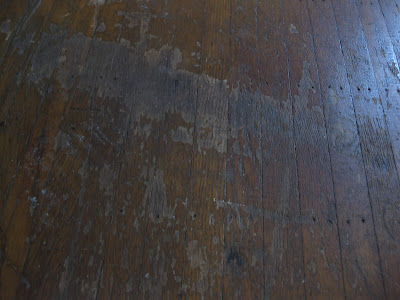


I closed on the house the day I came back to Rochester, following the escapade in South America. There were nine days remaining before class resumed. I thought about spending that time fishing--something I wouldn't have time for once school kicked up again. But then I thought about how the house was empty, and soon it would be full--well, more full than totally empty; you can't rush furnishings. So I decided to go handyman and refinish the upstairs floors.
Four days of non-stop work from 7:30am to 12:30am and the pictures can show you what we accomplished. Mad props to my momz and Greg and Kamesh and Mac and Miguel for their help on the project. It was slightly less brutal and only possible with their help.
Sorry that the pictures don't match before/after. I wasn't planning on doing any before/after pics. I will try to do that for any future projects. And please overlook the formatting mess. That is another project I am in the middle of, remodeling the white space of el blog. This blog is under construction. Enjoy, but scroll with caution!
Before / After


Thursday, October 15, 2009
A Problem of Pediatric Proportion
I finished my Peds rotation! OK, well, sort of. I'll have to go back to this clinic in January for another five week stint, but for now, I'm finito. At least, I finished enough to call for celebration.
I'm so over children :) Is it the kids that I'm over, or the moms? Before we begin seeing patients in the afternoon, all the residents and I get together with the attending to review some topic of care. Today we were going over asthma but the conversation got a little off track and one of the residents wanted to discuss when the child should be taken away from the mother's care. You know, due to "dumb mother syndrome." See, this is the advantage of being out in the clinics. You don't learn about dumb mother syndrome, DMS, in the classroom.
The manifestation of the disorder is clear. A post pubescent female presents to the pediactric clinic with a small child assumed to be their offspring.
OK, there is more; not every mother who brings their kid in is considered "slow."
The post pubescent female mentioned above, in addition to bringing her child to the pediatrician's, will demonstrate one or more of the following:
Continues to smoke around her baby already diagnosed w asthma
Does not allow her child to be vaccinated
Fails to fill her baby's prescription
Uh, am I missing any? Please be on the lookout for these signs. The CDC has noticed a spike in DMS within the past nine months and we want to put a stop to it before we have two pandemics on our hands. Do your part and report DMS, ASAP, to your PCP, the FBI, CIA, or any other acronymous (just go with it) organization!
I'm so over children :) Is it the kids that I'm over, or the moms? Before we begin seeing patients in the afternoon, all the residents and I get together with the attending to review some topic of care. Today we were going over asthma but the conversation got a little off track and one of the residents wanted to discuss when the child should be taken away from the mother's care. You know, due to "dumb mother syndrome." See, this is the advantage of being out in the clinics. You don't learn about dumb mother syndrome, DMS, in the classroom.
The manifestation of the disorder is clear. A post pubescent female presents to the pediactric clinic with a small child assumed to be their offspring.
OK, there is more; not every mother who brings their kid in is considered "slow."
The post pubescent female mentioned above, in addition to bringing her child to the pediatrician's, will demonstrate one or more of the following:
Continues to smoke around her baby already diagnosed w asthma
Does not allow her child to be vaccinated
Fails to fill her baby's prescription
Uh, am I missing any? Please be on the lookout for these signs. The CDC has noticed a spike in DMS within the past nine months and we want to put a stop to it before we have two pandemics on our hands. Do your part and report DMS, ASAP, to your PCP, the FBI, CIA, or any other acronymous (just go with it) organization!
Sunday, October 4, 2009
Before & Happily Ever After
A few weeks ago, a patient answered my first question with, "Well, I bought three cars last week." I wasn't expecting to hear anything like that. I did not ask how many cars he or she bought. I did not ask anything related to purchasing behaviors. I just asked why he was here today. It didn't take many more questions before it was clear that he was seeking treatment and help with his bipolar disorder.
I've been suspicious of my own self and my bipolar tendencies ever since my grandfather was diagnosed with this illness. Well, it wasn't three cars, but I did buy a house this summer--slightly manic, yes. My recent conversation with this patient made it clear, however, that I am in no way bipolar.
No, it wasn't mania that led me to purchase a house. I just wanted to take care of something, to be responsible for something--and I was done with landlords, and I thought I could get a good ROI. Most everyone feels this way (responsibility/care) at one point or another in their life; and the traditional response to such a desire is to get a pet. Right? And how likely am I to do the traditional? Hence, the house.
Medical school is not the best occupation for someone interested in hobbies and such :) but here is a start at documenting some of the care I get to provide, outside of the clinics:

A couple of the doors in the house wouldn't shut. And I noticed they had the original door hinges from 1880. The doors needed some adjusting and the hinges just needed some cleaning (many hours of boiling and wire brushing/beeswaxing).

And after taking 140 yrs of paint and gunk off:
PS does anyone have any suggestions on bathroom tiles? Quick, I'm gonna do that soon!


I've been suspicious of my own self and my bipolar tendencies ever since my grandfather was diagnosed with this illness. Well, it wasn't three cars, but I did buy a house this summer--slightly manic, yes. My recent conversation with this patient made it clear, however, that I am in no way bipolar.
No, it wasn't mania that led me to purchase a house. I just wanted to take care of something, to be responsible for something--and I was done with landlords, and I thought I could get a good ROI. Most everyone feels this way (responsibility/care) at one point or another in their life; and the traditional response to such a desire is to get a pet. Right? And how likely am I to do the traditional? Hence, the house.
Medical school is not the best occupation for someone interested in hobbies and such :) but here is a start at documenting some of the care I get to provide, outside of the clinics:
A couple of the doors in the house wouldn't shut. And I noticed they had the original door hinges from 1880. The doors needed some adjusting and the hinges just needed some cleaning (many hours of boiling and wire brushing/beeswaxing).

And after taking 140 yrs of paint and gunk off:
PS does anyone have any suggestions on bathroom tiles? Quick, I'm gonna do that soon!


Subscribe to:
Posts (Atom)